 vs

Make vs Zapier: Visual AI Automation vs. Massive App Library
Make suits teams needing custom code, version control, and visual transparency across 3,500 apps. Zapier fits users prioritizing speed and a massive library of 9,000+ connections with enterprise security.
Last verified against both official websites on November 4, 2026
Make
Make is an AI automation platform that allows users to build workflows and AI agents visually, via prompt, or drag-and-drop. It connects to 3,500+ apps and offers observability, governance, and custom code capabilities.
Choose Make if you need custom code, version control, and visual workflow transparency for complex automations.
Official site Indie alternatives to Make
Zapier
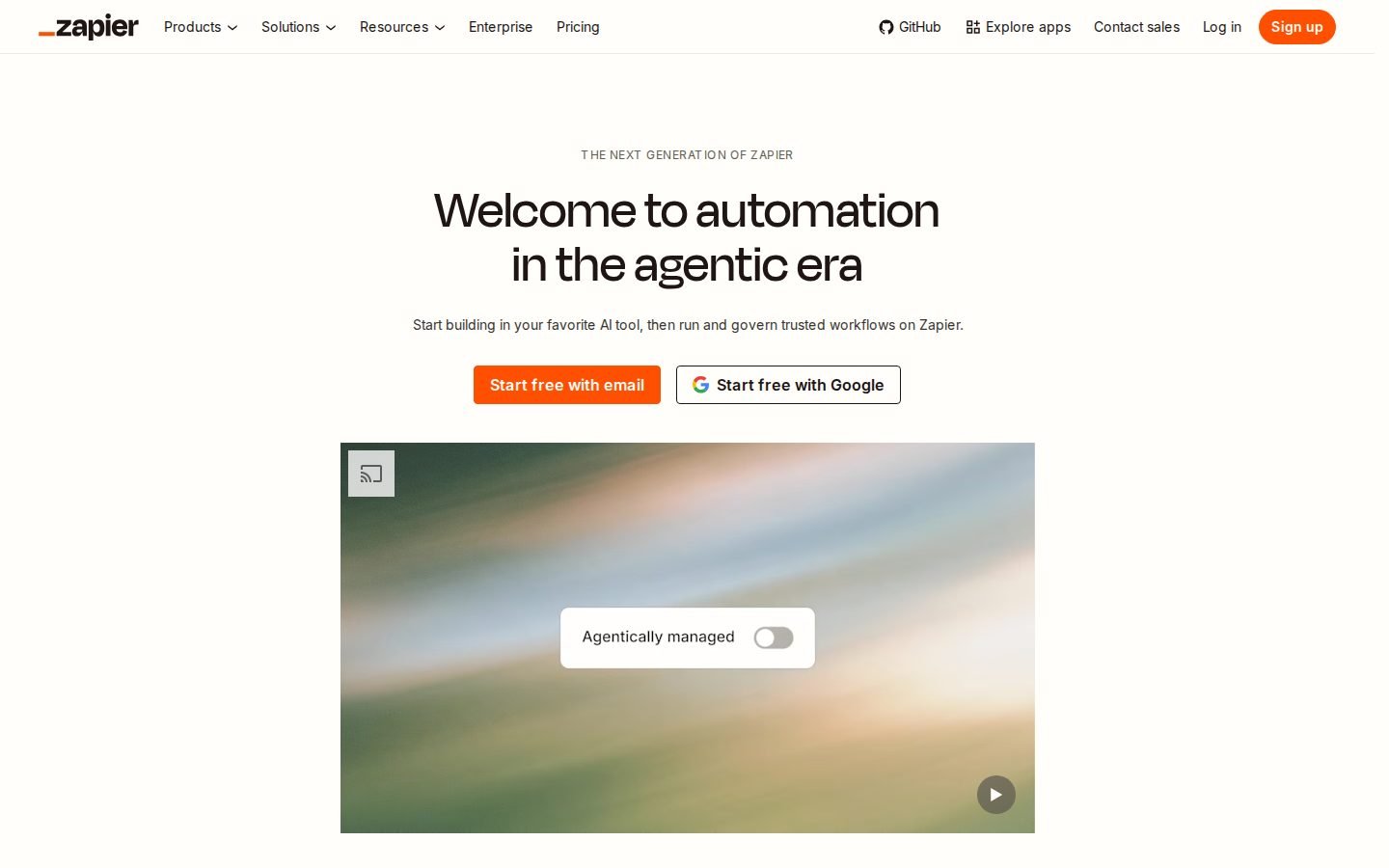
Zapier is a no-code automation platform connecting 9,000+ apps with AI orchestration, security governance, and multi-product support.
Choose Zapier if you want rapid setup across 9,000+ apps with enterprise-grade security and no-code ease.
Official site Indie alternatives to Zapier
Make vs Zapier pricing
| Make | Zapier | |
|---|---|---|
| Free plan | Yes | Yes |
| Free trial | No time limit on free plan | 7 days |
| Plans |
Free
Free
1000 credits per month, 1 MB data storage, 1 data store.
Start-up Plan
Not listed
50% off Business plan for under 20 employees.
|
Not listed on the site |
Prices as shown on each official pricing page when last verified (our servers are in the EU, so some sites show local currency). Check the official site before buying.
Features compared
| Feature | Make | Zapier |
|---|---|---|
| Free plan | Yes | Yes |
| App connections | 3,500+ | 9,000+ |
| Custom code | Yes | Not listed |
| Version control | Yes | Not listed |
| AI agents | Yes | Yes |
| MCP Server | Yes | Yes |
| Enterprise security | Yes | Yes |
| Data storage | 1 MB (Free) | Tables available |
| Governance | Yes | Yes |
| SDK for coding agents | Not listed | Yes |
Core Approach and Capabilities
Make provides a visual builder where users can create workflows via drag-and-drop, prompts, or custom code. It connects to over 3,500 apps and includes features like observability, execution history, and access control. Developers often prefer Make for its version control and code review capabilities, which help avoid logic trapped in a graphical interface.
Zapier operates as a no-code platform connecting more than 9,000 apps using Zap workflows. It emphasizes rapid functionality with AI orchestration, tables for data storage, and forms for input capture. Users praise Zapier for quickly wiring together services, though some note the trigger-action model can restrict complex content consumption.
Make supports custom code and version control.
AI and Advanced Features
Both platforms integrate artificial intelligence to enhance automation. Make allows users to build AI agents visually and includes an MCP Server for integration. It also offers governance and custom code capabilities for advanced use cases.
Zapier provides AI automation features alongside agents for AI assistants. It offers a Zapier MCP for chat integration and an SDK for AI coding agents. The platform supports multi-product workflows and enterprise-grade security governance.
Make includes AI agents and an MCP Server.
Pricing and Plans
Make offers a free plan with no time limit, providing 1,000 credits per month, 1 MB of data storage, and one data store. Credits expire at the end of the term. The platform also lists a Start-up Plan that offers 50% off the Business plan for organizations with under 20 employees, though the price is custom.
Zapier has a free plan and a 7-day trial available. Specific pricing details for paid tiers are not listed on its site. The platform supports enterprise-grade security and governance for larger teams.
Make provides a free plan with 1,000 monthly credits.
What users say
Make
- Make is preferred by developers over GUI-only tools like Zapier because it allows version control, code review, and avoids logic trapped in a GUI. [1]
Summarized from public Hacker News discussions; links go to the original comments.
Indie alternatives to Make and Zapier
Smaller tools built by independent makers that cover part of what these two do, often for less.

Deforge
Canva for AI Agents
Make users looking for AI-specific workflows can use Deforge's 'Chat to Build' feature to generate agent logic visually, offering a more specialized AI agent builder than Make's general automation nodes.
See website for pricing

Notis
An AI assistant that works across your apps via messaging.
Users of Zapier for automating tasks between apps can switch to Notis for a simpler, messaging-first interface to trigger actions across 1,000+ apps without building complex workflows.
See website for pricing

Phantom
Voice-first AI agent that operates your Mac
Users of Zapier for automating cross-app tasks might switch to Phantom for a more natural, voice-driven interface that executes actions directly on the Mac rather than configuring web-based workflows.
Free plan available. Pro $20/month. Max $100/month.

FewTap
Instagram DM automation made dead simple
Users of Zapier often build custom Instagram DM automations using complex workflows; FewTap offers a dedicated, simpler, and cheaper solution specifically for this use case without the need for workflow building.
Free plan includes 5 active automations and 1,500 DMs/month. Pro plan is $10/month for unlimited automations and DMs.

Sheets to JSON
A Google Sheets™ to JSON converter
Similar to Zapier, users looking for a simpler, cheaper alternative to build automation flows just for converting sheet data to JSON can use this dedicated tool.
One-time payment of $7 includes all future updates and improvements.

AutoPrintEmail
Automatically print emails and attachments from Gmail, Outlook, and IMAP.
Users who currently use Zapier to trigger email printing workflows can switch to AutoPrintEmail for a simpler, dedicated desktop solution that doesn't require API configuration or monthly automation credits.
Free 3-day trial. Monthly plan at $14.99/month. Lifetime license available for $199.

Hark
The personal AI that handles life before you have to
Users of Zapier for automating personal tasks (like booking travel or managing emails) can switch to Hark for a more integrated, conversational AI agent that executes these actions directly rather than just connecting apps.
Free to use. Pro² $20 / month. Pro³ $100 / month.

Robomotion
AI-powered automation builder that works with or without APIs
Like Make, Robomotion allows users to build complex workflows and agents, but distinguishes itself by supporting local execution and handling non-API tasks through UI automation, making it a viable alternative for users needing broader system access.
See website for pricing

Shiploud
Turn your GitHub commits into social posts with AI
Users who currently build custom Zapier automations to connect GitHub to Twitter/LinkedIn might switch to Shiploud for a dedicated, pre-built solution that handles the AI writing and formatting specifically for 'building in public'.
Free tier: 3 quick posts and 1 builder log per day. Pro plan: $80/year for unlimited posts and builder logs.

Dex
Turn tabs into automated workflows and tasks
Users of Zapier for connecting apps and automating workflows may switch to Dex for its deeper, context-aware autonomous agents that operate directly within the browser rather than just triggering simple webhooks.
Core plan at $49/month, Max at $99/month, Ultra at $199/month. Custom pricing available for Full Service.
Fantasma Dev
A portfolio of niche software tools for automation, social media, and productivity.
Users of Zapier for simple, specific automations like social media outreach or Discord moderation might prefer Fantasma's dedicated, single-purpose tools like 'DM Dad' or 'Bouncer' to avoid the complexity and cost of a full automation platform.
See website for pricing

TODO for AI
TODO for AI: your TODO list does the work
Users of Zapier for workflow automation can switch to TODO for AI for more complex, agent-based automation that involves browsing the web and using CLI tools, rather than just connecting APIs.
Free plan available with $2 shared credit. Paid plans start at $20/month (Starter), $100/month (Pro), and $200/month (Ultra).
More comparisons
FAQ
Does Make have a free plan?
Yes, Make offers a free plan with no time limit that includes 1,000 credits per month, 1 MB of data storage, and one data store.
Is Zapier cheaper than Make?
Both platforms offer free plans. Make lists a Start-up Plan with 50% off the Business plan for under 20 employees, while Zapier pricing details are not listed on its site.
Does Make support custom code?
Yes, Make allows users to build workflows using custom code, in addition to visual drag-and-drop and prompt-based builders.
How many apps does Zapier connect to?
Zapier connects to more than 9,000 apps, offering over 66,000 triggers and actions.
Does Zapier have enterprise security?
Yes, Zapier provides enterprise-grade security and governance features for teams and organizations.
This comparison is generated automatically from the official websites and re-verified periodically. Spotted something wrong? Tell me.